

Top Noise Control Manufacturer Nanjing Huajing Advances Integrated Acoustic Solutions
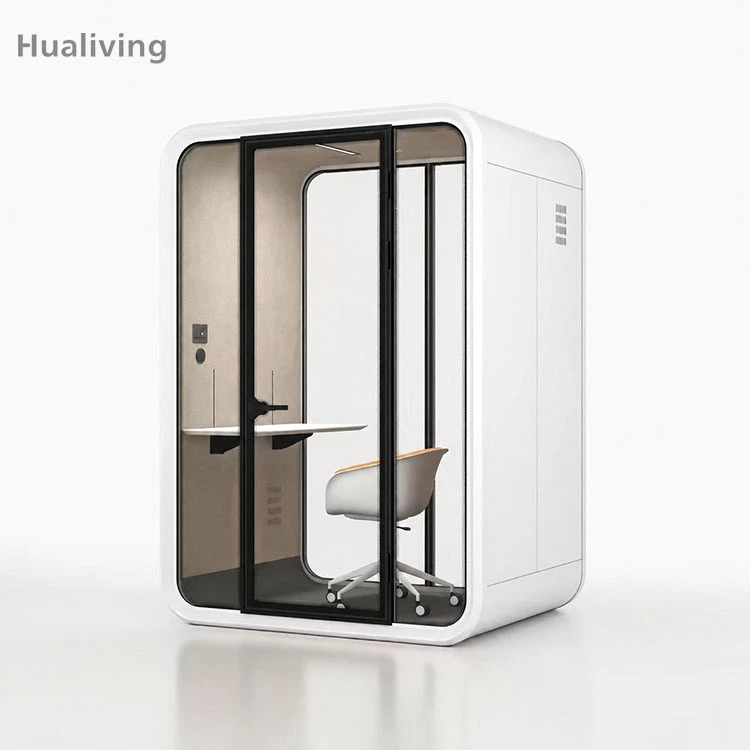
2 Person Meeting Pod
NANJING, JIANGSU, CHINA, October 14, 2026 /EINPresswire.com/ --
As businesses and industrial operators place greater emphasis on workplace comfort, environmental compliance, and effective noise management, acoustic engineering has become an increasingly important part of modern facility design. Nanjing Huajing Environmental Engineering Co., Ltd. is active in the noise control sector, providing engineering services and acoustic products designed to address sound transmission and noise-related challenges across different environments. Among its product categories, Acoustic Pods represent a practical approach to creating quieter, more private spaces within offices and other shared environments, while the company's broader portfolio covers industrial sound insulation, silencers, acoustic panels, and noise reduction engineering.
Noise control is no longer limited to installing sound-absorbing materials or building conventional soundproof rooms. Effective solutions require an understanding of noise sources, sound transmission paths, building layouts, ventilation, equipment operation, and the needs of people using the space. As a result, organizations increasingly look for manufacturers and engineering partners that can combine product design with application-specific planning. Nanjing Huajing Environmental Engineering Co., Ltd. operates in this broader market, where customized acoustic products and engineering services can help customers address both localized sound problems and more complex noise control requirements.
Acoustic Pods Address the Need for Quieter Spaces
Modern offices, educational facilities, commercial buildings, and collaborative workplaces often bring people together in open environments. Although these layouts can encourage communication and flexible use of space, they can also create challenges for confidential conversations, online meetings, focused work, and other activities that require reduced distractions. Acoustic Pods offer one approach to this challenge by providing enclosed spaces intended for specific communication or work activities.
Unlike a conventional meeting room that requires a permanent partitioned area, an acoustic pod can be positioned within a larger interior space according to the building layout and users' needs. Depending on its configuration, a pod may serve as a place for telephone calls, video conferences, individual work, private discussions, or small meetings. This flexibility can be valuable for companies that want to introduce quieter spaces without undertaking extensive building renovations.
For organizations evaluating Acoustic Pods from Nanjing Huajing Environmental Engineering Co., Ltd., the central consideration is how the product fits the intended use. A pod designed for individual calls may have different space, acoustic, ventilation, and electrical requirements from one intended for multiple occupants or longer meetings. Buyers should evaluate the number of users, expected occupancy duration, available floor space, accessibility, and required degree of speech privacy before selecting a configuration.
Acoustic performance also depends on the complete enclosure rather than a single wall or door. Sound may pass through panel joints, glazing, ventilation openings, door gaps, and other weak points. The overall result therefore depends on how the walls, door, ceiling, seals, and connections work together. A well-planned pod should be assessed as an integrated product, with performance information matched to the conditions in which it will be used.
Acoustic Design Beyond Sound Absorption
Sound absorption and sound insulation are related but different aspects of acoustic engineering. Absorptive materials help reduce reflected sound within a space, which can improve speech clarity and limit reverberation. Sound-insulating construction, by contrast, is intended to limit sound transmission from one area to another. Many noise control applications require a combination of these approaches.
For an acoustic pod, the interior treatment can influence how comfortable a conversation sounds, while the enclosure and its seals affect how much sound travels through the structure. The door, observation window, ventilation system, and panel connections can all influence the finished performance. Selecting materials based solely on their appearance or nominal thickness is therefore insufficient when a project has defined acoustic requirements.
Nanjing Huajing Environmental Engineering Co., Ltd. also provides broader acoustic products and engineering services, according to its published company information. Its product categories include sound-insulating rooms, acoustic panels, silencers, and sound-insulating doors. These products address different parts of the noise control process and may be relevant to projects that extend beyond the installation of a single pod.
In a commercial setting, for example, an organization may need both an enclosed space for private conversations and acoustic treatment in surrounding meeting or work areas. In an industrial environment, the main objective may instead be to reduce noise emitted by machinery while maintaining access for inspection and maintenance. Understanding these distinctions helps buyers identify the appropriate product category and avoid relying on a single measure to solve a more complex problem.
Industrial Noise Control Requires a Systematic Approach
Industrial noise can originate from rotating machinery, fans, pumps, compressors, cooling towers, production lines, ventilation systems, and other operating equipment. Depending on the source and surrounding conditions, sound may travel through the air, pass through building structures, or propagate beyond a facility boundary. Noise reduction projects must therefore begin with an assessment of the actual source and the routes through which sound reaches workers or nearby properties.
Nanjing Huajing Environmental Engineering Co., Ltd. describes its business scope as including noise reduction design and consulting, acoustic product manufacturing, and noise reduction engineering construction. This combination reflects an integrated approach in which assessment and engineering design can inform product selection and installation. For industrial customers, such coordination can be important because a solution must reduce unwanted sound without compromising equipment performance or routine operations.
The company's published project categories include cooling tower noise reduction, heat pump noise reduction, air-conditioning unit noise control, production line noise reduction, industrial equipment noise reduction, and facility-boundary noise management. These applications illustrate the range of environments in which acoustic engineering may be required. Each application has different constraints, and the appropriate solution depends on the operating characteristics of the equipment and the acoustic conditions at the site.
For instance, an enclosure around noisy machinery may reduce airborne sound, but it can also restrict airflow or increase internal temperatures if ventilation is not adequately designed. A barrier may interrupt a direct sound path, but its effectiveness depends on its height, placement, continuity, and the location of the receiver. A silencer can reduce noise moving through an air duct or exhaust path, but its selection must account for airflow, pressure loss, operating temperature, and the frequency characteristics of the noise.
These considerations demonstrate why noise control should be treated as an engineering task rather than simply a materials purchase. Site surveys, source identification, acoustic calculations, equipment specifications, and post-installation verification can all contribute to a more reliable outcome.
Acoustic Products for Different Applications
Sound-insulating rooms are used when an activity or piece of equipment requires separation from the surrounding environment. Depending on the design, these rooms may support testing, equipment operation, inspection, or other noise-sensitive tasks. Their construction can involve acoustic panels, specialized doors, sealed joints, and ventilation arrangements designed around the intended operating conditions.
Silencers serve another function by reducing sound associated with moving air or gas. They may be used in ventilation systems, industrial exhaust arrangements, or other applications where noise travels through a duct or outlet. Different designs are suitable for different airflow rates, temperature conditions, pressure requirements, and sound frequency profiles. Choosing an appropriate silencer requires both acoustic and mechanical considerations.
Acoustic panels and sound-insulating doors can form part of larger building or industrial noise control projects. Panel selection depends on the intended function, construction details, installation environment, and required performance. Doors require particular attention because gaps around the frame and inadequate sealing can undermine the performance of the surrounding wall. For facilities that need frequent access, the design must also balance acoustic requirements with usability, durability, and maintenance.
Acoustic Pods serve a more localized purpose by creating a defined interior space for calls, meetings, and focused work. In offices and commercial buildings, they can provide an alternative to constructing additional permanent rooms. Their practical value depends on the layout of the space, occupant comfort, air circulation, accessibility, and how effectively the enclosure meets the user's acoustic expectations.
By offering multiple types of acoustic products and noise control services, Nanjing Huajing Environmental Engineering Co., Ltd. participates in a market that spans both individual acoustic installations and larger engineering projects. Customers should confirm which products and configurations are currently available and whether a proposed solution can be adapted to their specific application.
Manufacturing and Customization Considerations
The performance of an acoustic product is influenced by design, materials, manufacturing consistency, and installation quality. For buyers comparing noise control manufacturers, product documentation and engineering support are therefore important parts of the procurement process.
For Acoustic Pods, purchasers should ask for information about dimensions, occupancy capacity, door and glazing arrangements, ventilation, electrical fittings, interior finishes, and available acoustic test results. Where speech privacy or noise reduction is a key requirement, the stated performance should be supported by appropriate testing information, with the measurement conditions clearly identified. Results obtained under laboratory conditions may not translate directly to every installed environment.
For industrial acoustic products, the assessment should be more closely tied to the operating conditions. Buyers may need to provide equipment drawings, noise measurements, airflow information, operating temperatures, maintenance clearances, and site restrictions. This information can help the engineering team determine whether an enclosure, barrier, silencer, or combined approach is appropriate.
Customization may also be relevant when standard products cannot meet the required dimensions or site constraints. However, any changes to the structure, ventilation, glazing, doors, or internal fittings should be reviewed for their effect on acoustic performance and practical use. Buyers should request clear drawings and specifications before production and establish how changes are handled during manufacturing and installation.
After-sales support is another consideration. Acoustic products may require inspection of seals, doors, moving components, ventilation systems, and other elements over time. Industrial installations may also need access for equipment servicing or future modifications. Clear maintenance instructions, spare-part arrangements, warranty terms, and communication with the supplier can help customers manage these requirements throughout the product's service life.
Supporting Workplace Comfort and Environmental Management
The wider noise control market is influenced by both human comfort and operational needs. In offices, reducing unwanted sound can help people hold conversations and concentrate on individual tasks. In industrial settings, noise management can support a more controlled working environment and help facilities address applicable environmental requirements. The specific measures needed depend on the source, location, relevant regulations, and intended performance target.
Acoustic Pods can contribute to workplace planning by creating designated spaces for calls and focused activities. However, they are not a universal solution to building-wide noise problems. If the main issue is reverberation across an open office, room-level acoustic treatment may be more appropriate. If sound travels from nearby machinery, the source and transmission path may require separate treatment. A sound assessment can help determine which intervention best matches the problem.
For industrial customers, noise control also needs to account for ongoing production. Equipment access, heat dissipation, airflow, structural support, and safety procedures should be considered alongside acoustic performance. Effective engineering balances these requirements rather than optimizing one measurement at the expense of other operating needs.
Nanjing Huajing Environmental Engineering Co., Ltd.'s stated combination of consulting, acoustic product manufacturing, and engineering construction provides a framework for addressing different project scales. Prospective customers can discuss their requirements with the company to establish whether Acoustic Pods or another acoustic product category is appropriate for the intended environment.
Choosing a Noise Control Manufacturer
Selecting a noise control manufacturer should begin with a clear definition of the problem. Buyers should identify the source of the noise, the areas affected, the operating schedule, the desired acoustic outcome, and any limitations on space or installation. This initial information helps determine whether a standard product, a customized enclosure, or a broader engineering solution is required.
The next step is to compare technical documentation, project experience, material specifications, testing evidence, and installation requirements. Buyers should also clarify which services are included in the quotation, such as site assessment, design, manufacturing, delivery, installation, and performance verification. These details can influence both project cost and the likelihood that the final system will meet its intended purpose.
For Acoustic Pods in particular, the procurement review should consider occupant comfort as well as sound insulation. Ventilation, temperature, lighting, access, interior dimensions, and ease of cleaning can all affect the everyday experience of users. A pod that performs well acoustically but is uncomfortable to occupy may not deliver the expected practical value.
For larger industrial projects, engineering calculations and installation planning are equally important. Customers should confirm that the proposed solution is compatible with the equipment's operating conditions and that any relevant performance targets can be measured after installation. Clear acceptance criteria can help all parties understand what the project is expected to achieve.
As businesses continue to invest in better acoustic environments, manufacturers with a clear product range and a systematic engineering approach remain relevant to both commercial and industrial buyers. By evaluating Acoustic Pods alongside its broader acoustic products and engineering capabilities, customers can determine whether Nanjing Huajing Environmental Engineering Co., Ltd. is a suitable partner for their noise control requirements.
About Nanjing Huajing Environmental Engineering Co., Ltd.
Nanjing Huajing Environmental Engineering Co., Ltd. is a China-based company established in 2010, according to its published company profile. The company focuses on noise control engineering, acoustic product research and manufacturing, technical consulting, and noise reduction project implementation. Its product portfolio includes Acoustic Pods, sound-insulating rooms, acoustic panels, sound-insulating doors, and silencers. Its stated project applications include cooling towers, heat pumps, air-conditioning equipment, production lines, industrial machinery, and facility-boundary noise control. The company presents its services as covering noise assessment, solution design, product manufacturing, installation, and project delivery. For further company information and product inquiries, the website provided for this profile is [www.hjacoustics.com]. Prospective customers should confirm the current product range, technical specifications, acoustic performance documentation, customization options, and service arrangements directly with the company before placing an order.
Address: Room 518, No.12 Jinlan Road, Dongshan Subdistrict, Jiangning District, Nanjing City, Jiangsu Province, China
Official Website: https://www.hjacoustics.com/
Mia Li
Nanjing Huajing Environmental Engineering Co., Ltd.
contact@hualiving.cn
Legal Disclaimer:
EIN Presswire provides this news content "as is" without warranty of any kind. We do not accept any responsibility or liability for the accuracy, content, images, videos, licenses, completeness, legality, or reliability of the information contained in this article. If you have any complaints or copyright issues related to this article, kindly contact the author above.
